
What is a Dental Bridge?
Missing teeth affect more than your smile. They can change how you chew, how you speak, and even how your remaining teeth line up over time. If you’re wondering what is a dental bridge, the short answer is this: it’s a fixed restoration that fills the gap left by one or more missing teeth, using the natural teeth or implants beside the gap as anchors.
In this guide, we explain how a dental bridge works, the main types, the benefits, the treatment process, and how to keep your bridge lasting for years.
What Is a Dental Bridge?
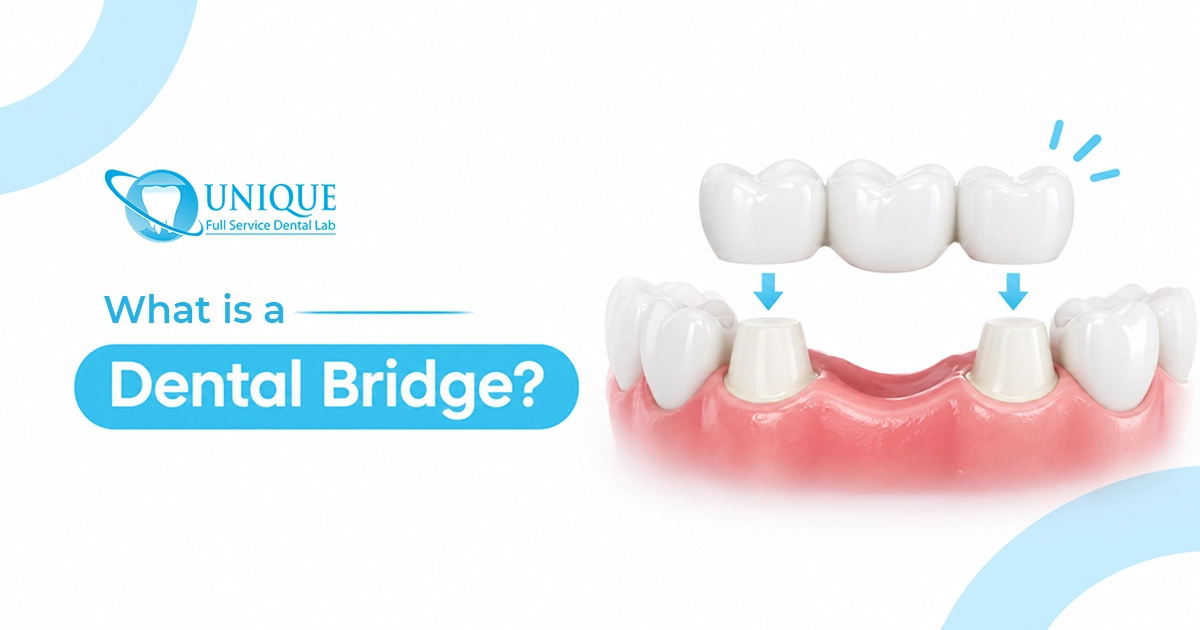
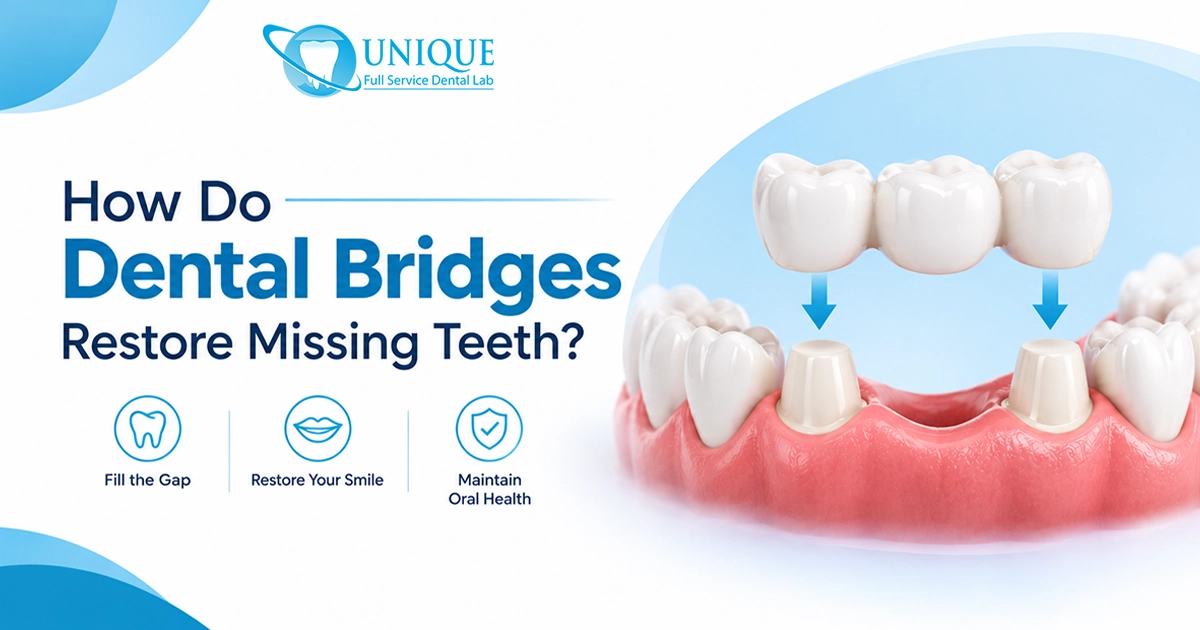
A dental bridge is a custom-made prosthetic that “bridges” the space created by a missing tooth. It has two main parts:
- Pontic: the artificial tooth (or teeth) that fills the gap.
- Abutments: the supporting teeth or implants on either side of the gap that hold the bridge in place.
A dental tooth bridge is cemented or fixed in position, so unlike a removable denture, it stays in your mouth and feels much like a natural tooth. Bridges are commonly made from porcelain, ceramic, zirconia, or porcelain fused to metal, and are shaped and shaded to match your surrounding teeth.
How Do Dental Bridges Restore Missing Teeth?
When a tooth is lost, neighboring teeth can drift into the empty space, and the opposing tooth can shift as well. This can lead to bite problems, uneven wear, and food trapping that raises the risk of decay and gum disease.
A dental bridge for missing teeth restores:
- Function: you can bite and chew more comfortably.
- Appearance: the gap is filled with a natural-looking tooth.
- Speech: missing teeth can affect pronunciation, and a bridge helps restore clear speech.
- Alignment: it helps keep nearby teeth from shifting out of place.
- Bite balance: forces are shared more evenly across your teeth.
Types of Dental Bridges
There are four common types. Your dentist will recommend the best one based on the location of the gap, the health of nearby teeth, and your budget.
1. Traditional Bridge
The most common option. A pontic is held by crowns placed on the teeth on both sides of the gap. It’s strong and suits gaps where healthy natural teeth sit on both sides.
2. Cantilever Bridge
The pontic is supported by a crown on only one side. It’s used when there is a natural tooth on just one side of the gap, and it’s typically considered for areas that carry less bite force.
3. Maryland (Resin-Bonded) Bridge
The pontic is attached with a metal or porcelain framework bonded to the back of neighboring teeth. It requires less preparation of those teeth, and is often used for front teeth.
4. Implant-Supported Bridge
Instead of natural teeth, dental implants anchor the bridge. It offers excellent stability and doesn’t rely on neighboring teeth, but requires surgery and a longer treatment timeline.
Quick Comparison
| Bridge Type | Support | Best For | Key Consideration |
|---|---|---|---|
| Traditional | Crowns on both sides | Gaps with healthy teeth on both sides | Neighboring teeth must be reshaped |
| Cantilever | Crown on one side | Low-stress areas with one neighboring tooth | Not ideal for heavy chewing areas |
| Maryland | Bonded framework | Front teeth, conservative approach | Less strong than crown-supported bridges |
| Implant-Supported | Dental implants | Multiple missing teeth, long-term solution | Surgery and a longer timeline |
Benefits of a Dental Bridge
- Natural-looking results that blend with your smile
- Fixed and stable, with no removing or soaking
- Quicker and often less invasive than some alternatives
- Restores chewing strength and clear speech
- Helps maintain facial shape by supporting the lips and cheeks
- Long-lasting with good care, often 10 years or more
What Is the Dental Bridge Treatment Process?
A typical dental bridge treatment takes two or more visits:
- Consultation and planning: your dentist examines your teeth, gums, and X-rays to confirm that a bridge is suitable.
- Tooth preparation: the anchoring teeth are gently reshaped to hold crowns. Impressions or digital scans are taken.
- Custom fabrication: a dental laboratory crafts the bridge to match the shape, size, and shade of your teeth. A temporary bridge protects the area meanwhile.
- Fitting and bonding: the final bridge is checked for fit, bite, and appearance, then permanently cemented.
- Follow-up: small adjustments are made if needed, and you receive care instructions.
The precision of the lab work matters. A well-made bridge fits snugly, feels comfortable, and helps prevent gum irritation and decay beneath it.
How to Care for Your Dental Bridge
Good hygiene is the key to a long-lasting bridge.
- Brush twice daily with a soft-bristled brush and fluoride toothpaste.
- Clean under the pontic every day using floss threaders, interdental brushes, or a water flosser.
- Attend dental check-ups and cleanings every six months.
- Avoid chewing very hard items like ice, hard candy, or pen caps.
- Treat grinding or clenching with a night guard if your dentist recommends it.
The supporting teeth must stay healthy, because if they decay or lose gum support, the bridge can fail.
Are Dental Bridges Right for You?
A bridge may be a good fit if you have one or more missing teeth, healthy teeth or implants near the gap, and good gum health. It may not be suitable if the neighboring teeth are weak or the gums are unhealthy. Your dentist can also discuss alternatives such as dental implants or partial dentures.
This article is for general information and does not replace advice from your dentist.
Final Thoughts
A dental bridge is a proven, reliable way to replace missing teeth, restore your bite, and bring back your confidence to smile. Understanding the types and the process helps you have a better conversation with your dentist and choose the right option.
Explore quality tooth replacement bridges and custom dental restorations at Unique Lab, and talk to your dentist about the best solution for your smile.
Frequently Asked Questions
What is a dental bridge?
A dental bridge is a fixed prosthetic that replaces one or more missing teeth by anchoring an artificial tooth to neighboring teeth or implants.
How long does a dental bridge last?
With good oral hygiene and regular check-ups, a bridge often lasts 10 years or more, and many last longer.
Is getting a dental bridge painful?
The procedure is done under local anesthesia, so you shouldn’t feel pain. Mild sensitivity for a few days afterward is common.
Can I eat normally with a dental bridge?
Yes. After the final bridge is placed and any initial adjustment period passes, most people eat normally. Avoid very hard or sticky foods.
What is the difference between a dental bridge and an implant?
A bridge relies on neighboring teeth or implants for support, while a single implant replaces the tooth root and stands on its own in the jaw.

Leave a Reply