
Night Guard vs TMJ Splint: Key Differences & Benefits
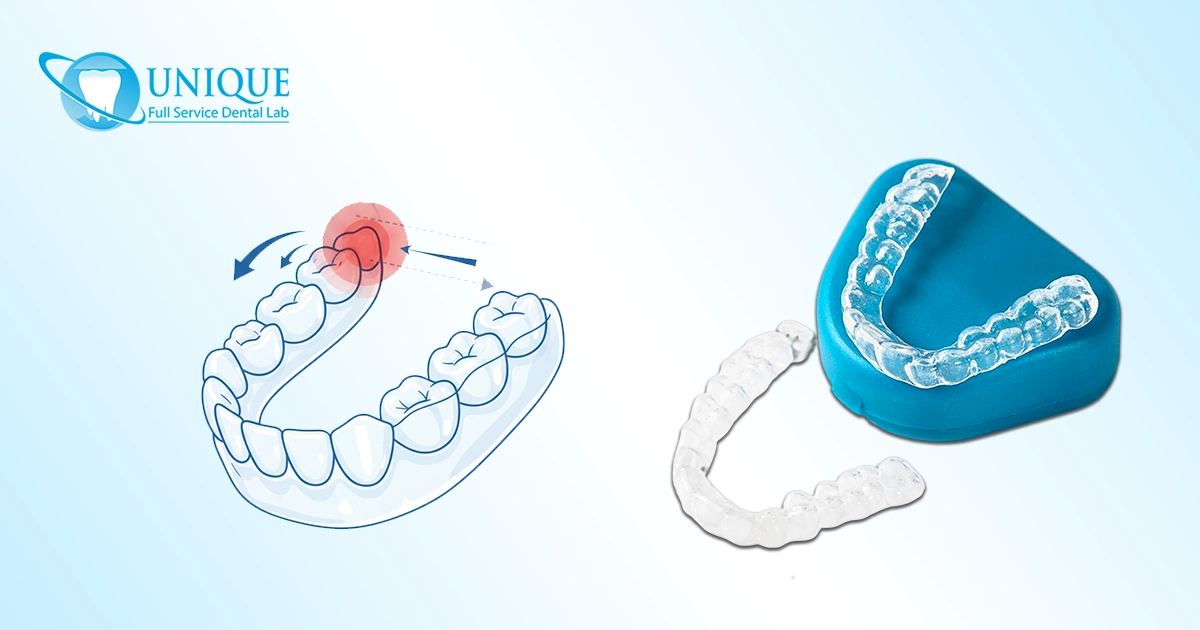
If you’ve ever dealt with jaw pain, persistent headaches, or unexplained tooth sensitivity, your dentist might have mentioned a dental appliance. Two of the most common are the night guard and the TMJ splint. While they might look similar, their purposes, design, and function are actually quite different.
Understanding this distinction is key to getting the right treatment. At Unique Dental Lab, we craft both with precision, but knowing which one you need starts with understanding what each one is designed to do.
The Night Guard: Your Shield Against Grinding
A night guard (sometimes called a Teeth grinding mouth guard) is the more common of the two appliances. Its primary, singular focus is protection.
How It Works
Imagine a helmet for your teeth. A night guard is a custom-fitted acrylic retainer worn, typically, on the upper teeth. Its job is simple: create a physical barrier between your top and bottom teeth.
If you suffer from bruxism (unconscious teeth grinding and clenching, usually while sleeping), a night guard ensures that when you grind, you’re grinding against the durable plastic instead of wearing down your natural tooth enamel.
Benefits of a Night Guard
- Protects Enamel: The most crucial benefit; it prevents the costly, irreversible damage of tooth wear, fractures, and chips caused by grinding.
- Reduces Strain: By cushioning the bite, it helps reduce some of the muscular strain that leads to facial pain.
- Affordability: Custom-made night guards are generally a more straightforward, and thus more affordable night guard for TMJ symptom relief and tooth protection, compared to the complexity of a full TMJ splint.
- Easy Maintenance: Simple to clean and durable for daily night-time use.
Ready to protect your smile? You can shop custom night guards that are expertly crafted for a perfect, comfortable fit.
The TMJ Splint: A Re-Engineering Tool for Alignment
The TMJ (Temporomandibular Joint) splint is a more sophisticated and therapeutic device. It is not just about protection; it’s about repositioning, healing, and stabilization.
How It Works
The TMJ splint is specifically prescribed to treat Temporomandibular Disorders (TMD/TMJ), which involve problems with the jaw joint and the muscles that control jaw movement.
Unlike a night guard, a splint is carefully designed to change the alignment of your jaw. It guides your lower jaw into a precise, new position—often called the “neuromuscular” or “therapeutic” position—where the joint and muscles can rest and heal without strain. This repositioning is key to reducing pain, clicking, and jaw locking. A TMJ splint is often called a Jaw alignment splint for a reason!
Benefits of a TMJ Splint
- Pain Relief: By allowing the jaw joint and surrounding muscles to de-stress and heal in a corrected position, it provides significant relief from chronic facial pain, headaches, and neck pain associated with TMD.
- Joint Stabilization: It is the primary method for achieving TMJ splint for jaw alignment, helping to correct internal derangements (like a displaced disc) within the joint.
- Therapeutic: It is a treatment that changes the dynamics of your bite, rather than just a protective measure.
- Personalized Therapy: The design is highly customized and often adjusted over weeks or months by your dentist to fine-tune the optimal jaw position.
Want to dive deeper into jaw therapy? You can learn about TMJ splint benefits and how this therapeutic appliance works to re-establish a healthy jaw position.
The Key Takeaway: Purpose is Power
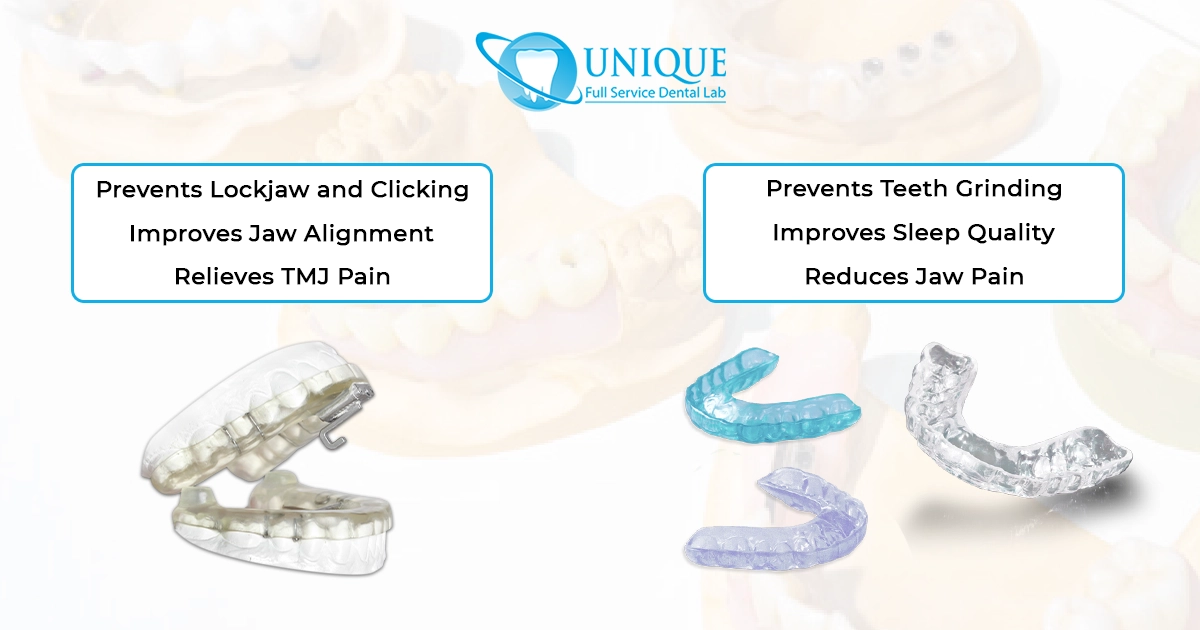
A night guard primarily protects your teeth from grinding or clenching, providing simple cushioning and relief for issues like bruxism or mild tooth sensitivity. In contrast, a TMJ splint is designed to reposition the jaw and address underlying joint problems, making it ideal for chronic TMD, jaw pain, clicking, or lockjaw. While night guards focus on protection, TMJ splints offer therapeutic correction.
Conclusion: Your First Step to Comfort
Both a night guard and a TMJ splint represent high-quality solutions for common dental issues. The most important step is consulting with your dentist. They will use diagnostic tools to determine the root cause of your symptoms, be it simple bruxism or a complex joint disorder, and prescribe the exact appliance your mouth needs.
At Unique Dental Lab, we pride ourselves on crafting both of these appliances with exceptional comfort and durability, ensuring that whichever one your dentist prescribes, you are getting the best possible care.

Leave a Reply